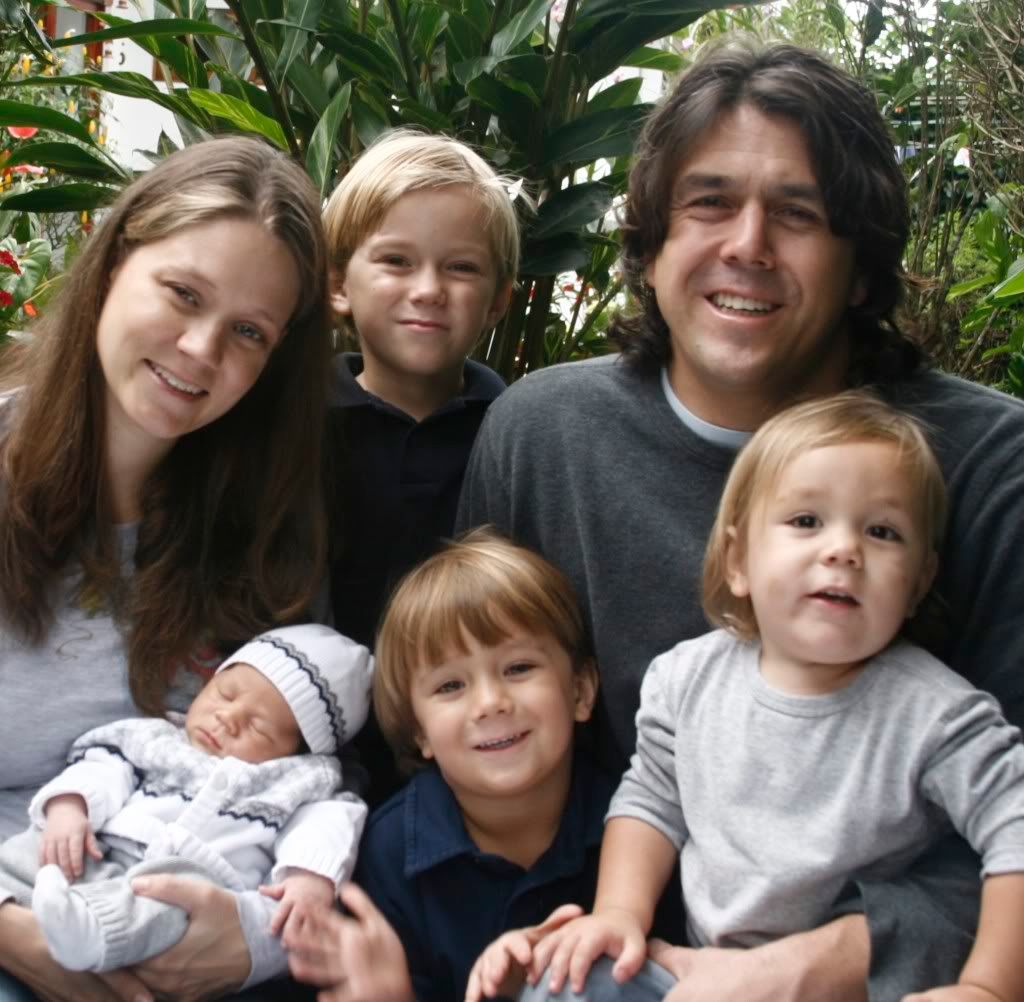
techniques from my journal again today. ( Here, here and here are previous posts I've written on the topic).
Scenario 1:
Today the boys were playing with a belt. Kai was pulling it while Ezra and Jude pulled the other way. It was a fun game at first until Ezra got really frustrated and started crying and yelling at Kai. I was coming over to help them sort the whole thing out when I decided to try another tactic.
I grabbed the belt and ran, "Try to get me!" At first Ezra looked at me angrily. Kai and Jude were giggling and began to chase me. Soon Ezra was giggling, too. He chased me and I let him get the belt from me. He threw it behind the couch declaring it to be in "cortis" (timeout in Costa Rica). I began to sob really loud. The boys were cracking up. Kai came in with another belt which ended up in "cortis" too, behind the couch. I sobbed again. More laughs. Then I said, "Let's have a snack." And everyone went giggling happily to the table.
Imagine if you took all the time you now spend fussing at siblings to stop fighting, and you spent it playing with them. What would happen? I bet they'd fight less, enjoy each other more, and you'd have fun, too. A great game for siblings is to grab the thing they are fighting over and run."
"If you think about what makes children giggle, often it's when reality is suspended and roles are reversed. These are giggles of liberation as they are freeing themselves from worries, fears, and especially from feeling powerless over their lives. They laugh, and their world is set right again."
Scenario 2:
Ezra was having a tough morning - crying over everything, getting angry, frustrated, not playing happily with his brothers. We were outside looking at our hermit crabs. Jude went inside to get them water. He came back with a cupful and poured it into their bowl. Ezra got mad because he wanted to pour it, not jude. He bumped the habitat so Jude would spill and then laughed at him. I asked him to stop because that was mean. He sat on the floor and started crying.
"When children are being mean, they are often sending us a signal that they are in need of more love and affection. The problem is that we may not feel very inclined to offer much affection to children who have been mean, or sassy, or difficult. Perhaps that's why children feel as if love is a scarce commodity sometimes. If we get over our reluctance to give out love to children who have been "bad," then it won't be scarce anymore."
"Let's play a game!" I said. We started with Go-Fish, but it wasn't going so well. So we turned it into a huge memory game. Kai got bored and drifted off to read, which was perfect because it gave me a chance to engage with Ezra. "Let's play the game where Ezra gets all the matches!" "Yeah!" So Ezra went around and found all the matches with me cheering for him and calling him the Super-Match Man. Yay! And then we went to have a big glass of orange juice (Ezzy's favorite). Now I see a major change in Ezra's behavior. He's playing happily with Jude like the sweet, creative, silly, imaginative boy that he is!
"Some parents fear that letting their children play this way will leave them unprepared for the cold, cruel world of their peers. Other children, after all, would never let them get away with such selfishness. On the contrary, being in charge of the play and the rules fills children's cup (their need for love and security)- and that refill then leaves them more able to play happily on a level playing field with their peers. It also helps them play out their tensions and upsets about the confusing world of games, rules, and competition."

A lot of these ideas are really new to me. I feel like as a mom I've been carrying a lot of stress and it's hard for me to just loosen up and be silly. More often than not I'm cracking the whip, so to speak. But I'm finding the benefits are incredible. So let's get down on the floor and play, laugh and have fun with our kids this week - and see what could happen!