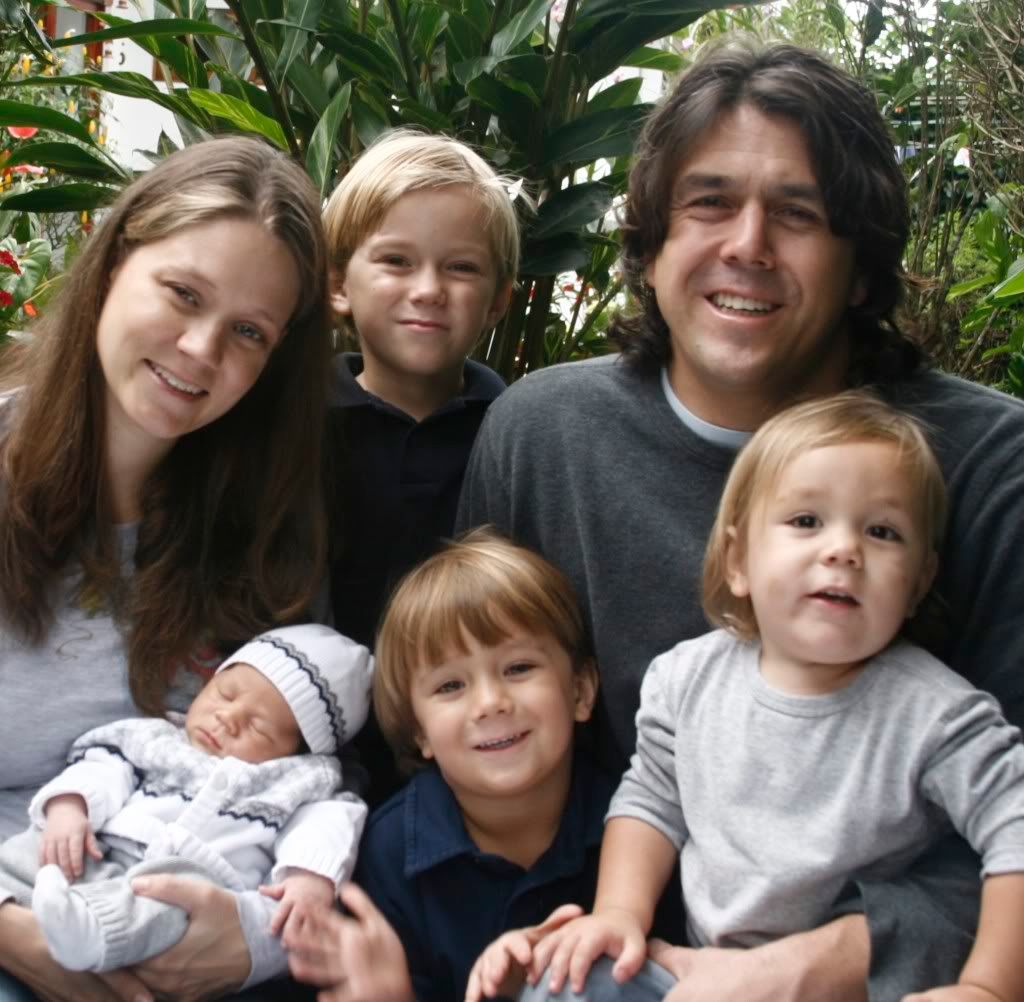
I've been trying to apply some of the principles of "Siblings Without Rivalry." The fighting is driving me up the wall - something must be done! Here are five steps outlined in the book (there are other steps when the situation is potentially dangerous or really difficult to resolve):
2. Listen to each child's side with respect.
3. Show appreciation for the difficulty of the problem.
4. Express faith in their ability to work out a mutually agreeable solution.
5. Leave the room.
So here's one scenario from today:
Ezzy: Screaming. It's that close-to-a-tantrum kind of scream.
I walk into the room and Kai has the little foam couch and is hiding in it. Ezra grabs it. Kai lunges for Ezra, grabs the couch back and returns to hiding in it. Ezra continues screaming. Uh oh - volatile situation!
Me: Ezzy, you want to use the couch?
Ezzy stops screaming long enough to nod.
Me: Kai, you do too, right?
Kai grunts in agreement from inside his hiding place.
Me: Hmmm... two kids who both want to use the couch. That's really tough. I bet if you work together you can come up with a solution that's fair to each of you.
Then I left the room.
This is what I heard as I was changing Koa's diaper.
Kai: Ok, come on Ezzy, I have an idea. We can go in the living room and build a fort. It's going to be really cool.
Ezra: no.
Kai went on describing the fort and trying to convince Ezra. Ezra was so worked up he wasn't going to come around easily. They continued arguing for a little bit and then next thing I knew both boys were happily walking to the living room to build a fort together.
Success!
 Here the happy brothers are playing in their fort together.
I cannot believe it actually worked!!! Now if I can just be consistent and continue to do this. It's hard. I really like this idea from the book. The authors say:
Basically we try not to interfere, but when we must step in, it's always with the thought that at the earliest possible moment we want to turn the children back to dealing with each other. We want them to experience themselves as solvers of problems. That's the best preparation we can give them for the rest of their lives (p. 174).